
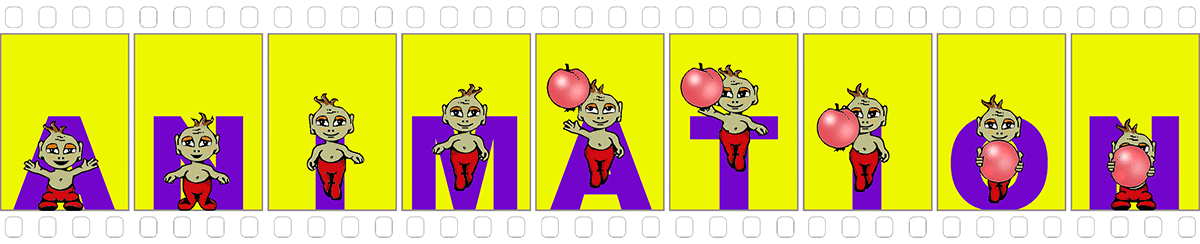
Hello.
Of all the graphic arts, animation is the most technically demanding.
There are plenty of programs that allow interpolation between keyframes—animation after a fashion—animation should have more going for it than just movement. It needs a communicative purpose.
For the innovative lawfirm of Fenwick & West, we animated this pretty holiday card that features their four locations and their commitment to creating opportunities.
The Stanford Graduate School of Business reminds alumni that half of the cost of their graduate education came from alumni contributions.
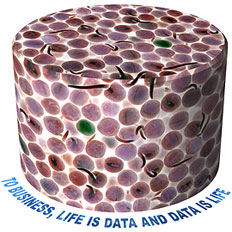
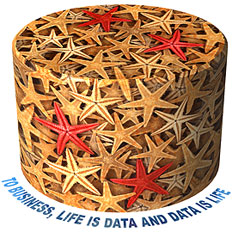
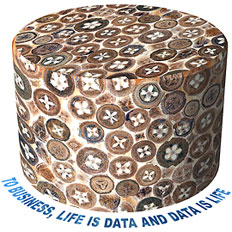
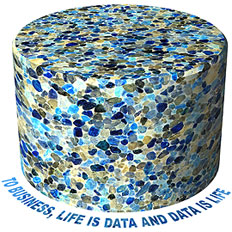
Some concepts are not inherently visual and require a bit of creativity to convey to an audience.
Blade Network Technologies, subsequently acquired by IBM, made innovative network computer equipment. This value proposition animation explains to Blade’s customers how they can simplify their network infrastructure using Blade’s products.
A collection of historical photos highlighting Stanford’s rich history was the inspiration for this video sent to alumni.
A train metaphor and a collection of student portraits anchor this thank you from the Stanford Graduate School of Business to the alumni who supported them.




For ComputerSculpture.com, animations used in the navigation help buyers find their way through a variety of products aimed at particular stages of a complex industrial process: scanning, modeling, tool paths, and milling.
Motion graphics can communicate complex ideas more effectively than narration alone. This is a collection of shots, for Offroad Capital, that were dropped into short videos about technology companies. For these shots, there was no provided imagery.
Some of the animation we do is created using traditional cel-based animation—an Oxberry animation table with a peg registration compound—and some of it originates entirely within the computer.
Our motion graphics have been used in corporate videos to quickly illuminate complex concepts. Often, an animation can make a difficult concept clear in seconds.
Our animation work is often tightly bound to our work as digital compositors. In our work, we use After Effects, Lightwave, Motion, Motor, together with many other tools. But it’s all in service of using animation to communicate something.
Case Study: Kids Online Network
 The Kids Online Network was a grand idea. We wanted to create a place for prereading kids on the Internet—a cross between AOL and Nickelodeon perhaps. Using a connected CD, children ages three to six were offered the interactivity and immediacy of a CD-ROM together with the connectivity and mutability possible on the Internet.
The main character of the Kids Online Network is Shroom. He's designed to appear to live his life inside the computer. Taking his cues from the computer’s internal clock, he eats breakfast, takes naps, and goes to bed at the same time as his young users. One of the educational goals of the CD is to teach young children about the concept and measurement of time.
We designed and built the environment, activities, and animations, but the project required a large corporate sponsor to continue. We were close to a deal when Disney’s “Blast” site was announced. Blast tried to provide one website to serve children ages 2 to 15! Although Blast never did what the Kids Online Network would have done, the prospect of competing with Disney was just too daunting for our sponsors.
In developing Kids Online Network, we created some proprietary techniques that makes possible certain complex effects. One was a sprite and path animation system which allows sprites with no transparent pixels to be fully anti-aliased and even appear partially transparent against a particular detailed background. No real time compositing is required when this animation is played. It sounds obscure, but it looks great and, if you’ve ever needed to do it, you’d appreciate how valuable it could be. It’s particularly well suited to animation on websites over static backgrounds.
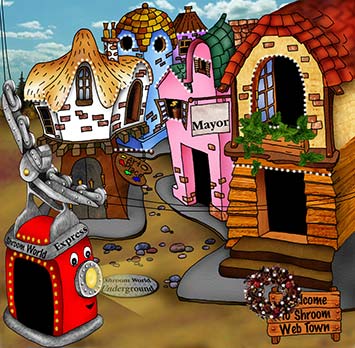
Kids Online Network featured a spatial graphic interface for use by pre-reading children.
The Kids Online Network trailer (1:40). Follow Shroom as he lives his life inside your computer. Kids Online Network was designed for pre-reading kids, ages three to six.
Kids Online Network Demo (15:28) is a low frame rate animation which illustrates an innovative sprite and path system that allowed for a 24/7 animated environment to be streamed over a low bandwidth connection.